
India's GDP growth for the current fiscal is expected to slow down to 4.8 per cent, a UN report has said, warning that the Covid-19 pandemic is expected to result in significant adverse economic impacts globally. The UN 'Economic and Social Survey of Asia and the Pacific (ESCAP) 2020: Towards sustainable economies' said that Covid-19 is having far-reaching economic and social consequences for the region, with strong cross-border spillover effects through trade, tourism and financial linkages.

With fears of delayed monsoon doing the rounds, an economic think tank on Tuesday said lower agricultural production is unlikely to affect the industrial growth this fiscal.\n\n

"At the moment, the fall is arrested (and it) is very clear. The growth is happening. We will only be looking at the steady growth. It may be slow but steady," Commerce Minister Nirmala Sitharaman told reporters in New Delhi.

Technology evolution forces private players to downsize operations.

India Inc said policymakers should take doable steps to revive fixed investments and production of capital goods

State Bank of India, Adani Ports, Tata Consultancy Services, ICICI Bank, Reliance Industries and PowerGrid were also among the laggards.

The production of coal, refinery products and electricity grew by 8 per cent, 1.9 per cent and 2.8 per cent, respectively.

The Reserve Bank of India, which mainly factors in retail inflation to decide its monetary policy, has been tasked by the government to ensure the rate of price rise remains around 4 per cent.

Why is Shailesh Chandra, managing director of Tata Motors Passenger Vehicles and Tata Passenger Electric Mobility, not worried about the competition?

India's most valued company, Reliance Industries Ltd (RIL), reported a robust performance in the third quarter of the current financial year (Q3FY25), surpassing analyst expectations. This coupled with positive commentary by brokerages led to the stock of the oil-to-telecom conglomerate surging as much as 4.44 per cent to hit an intraday high of Rs 1,325.1. It settled at Rs 1,301.3 apiece, up 2.57 per cent.

The previous low at 1.8 per cent was recorded in October 2017.
The Reserve Bank of India is expected to hold interest rate at 8 per cent in its fifth bi-monthly monetary policy review on Tuesday.

'Both IIP and CPI inflation numbers are showing a huge disconnect from the leading indicators.'

Foreign direct investment (FDI) inflows into India have crossed the $1 trillion milestone in the April 2000-September 2024 period, firmly establishing the country's reputation as a safe and key investment destination globally. According to data from the Department for Promotion of Industry and Internal Trade (DPIIT), the cumulative amount of FDI, including equity, reinvested earnings and other capital, stood at $1,033.40 billion during the said period.

Index of industrial production data had also shown that the sector grew at 3.1 per cent after contracting in the previous quarters.

India's gross domestic product product (GDP) growth rate between 2011-12 and 2016-17 should be about 4.5 per cent instead of the official estimate of close to 7 per cent, he said in a research paper published at Harvard University. "The Indian policy automobile has been navigated with a faulty, possibly broken, speedometer," he says in the paper.

'I am optimistic about the Budget because of the fiscal discipline the government has committed to.'

Privately, many bankers admit their immediate goal is not growth but slowing the erosion of Casa deposits, reveals Tamal Bandyopadhyay.
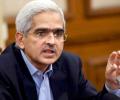
The December meeting of the Reserve Bank of India's (RBI's) six-member Monetary Policy Committee (MPC) will start on Wednesday even as there is no clarity on whether Governor Shaktikanta Das, the chair of the panel, will continue in office after his term ends next week. The outcome of the meeting will be announced on Friday by Das at 10 in the morning.

Vehicle sales have been hampered by weak consumer sentiment and still-weak availability of financing following tighter liquidity at non-banking lenders since the middle of 2018.

Manufacturing sector, which constitutes over 77 per cent of the index, showed a decline of 0.4 per cent in June as compared to a growth of 7.5 per cent in the same month last year.

The Reserve Bank India's (RBI's) decision to ban the onboarding of new accounts on the "bob World" mobile digital platform led to a selloff in the Bank of Baroda (BoB) stock. The stock of the public sector bank dropped by around 3 per cent. The central bank cited "material supervisory concerns"; news reports claimed mobile numbers were randomly linked to accounts to purportedly inflate registrations on bob World.

'This is also a time when you realise that short-term trading and dabbling in derivatives may result in financial losses.'

Information Technology (IT) major Infosys escalated the legal tussle with Cognizant by filing a countersuit in a US court, accusing the Nasdaq-listed firm and its Chief Executive Officer (CEO) Ravi Kumar of anticompetitive practices by maintaining its monopoly. Infosys has also alleged that Kumar misused sensitive information that slowed the launch of the company's health care platform Helix.

Department of Economic Affairs secretary Atanu Chakraborty said that equity capital flows have been positive this year.

Fresh order wins for capital goods and industrial companies may have seen a major slump due to Lok Sabha polls in the first quarter of the current financial year (Q1FY25). At the same time, revenue and profit growth trajectory is expected to have stayed the course, according to brokerage firms. Elara Capital, Motilal Oswal, and InCred Equities expect this sector universe to report a 12- 21 per cent growth in revenue, 21 -36 per cent growth in Ebitda and 24-38 per cent growth in profit on a year-on-year (Y-oY) basis.

It will be the second Budget of the Modi 3.0 government and eighth straight Budget for Nirmala Sitharaman, rare in Indian polity.

A recession is unlikely in the APAC region in the coming year, although the area will face headwinds from higher interest rates and slower global trade growth, Moody's Analytics said on Thursday. In its analysis titled 'APAC Outlook: A Coming Downshift', Moody's said India is headed for slower growth next year more in line with its long-term potential. On the upside, inward investment and productivity gains in technology as well as in agriculture could accelerate growth.

Private equity (PE) activity in India between January and November 2024 recorded a total value of $30.89 billion across 1,022 deals, a 22.7 per cent increase in value and an 18.4 per cent rise in deal count compared to $25.17 billion across 863 deals during the same period in 2023. Notable large deals during the period include Walton Street India Investment Advisors at $1.5 billion, and KiranaKart Technologies at $1.35 billion.

Passenger vehicle sales continue to drop in June; Maruti, Hyundai, Tata Motors, Toyota witness decline. Mahindra & Mahindra, however, reported a 4 per cent growth.
Eight infrastructure industries have posted a growth rate of 8 per cent for September on account of good performance by crude oil, steel and electricity sectors.

Sectors which recorded positive growth were coal, refinery products and fertiliser.

During the six-month period (April-September 2019), the Indian economy grew 4.8 per cent as against 7.5 per cent in the same period a year ago.

NSO has pegged economic growth at 5 per cent in 2019-20 in its second advance estimates.

These 10 stocks represent the best mix of value and growth, offering relatively low price-to-earnings and price-to-book ratios, a high return on equity, and sufficiently high potential from current levels.

A Reuters poll had forecast retail inflation would slow to 8.35 percent from an annual 8.79 percent in January.

The economy is likely to log in a tepid 6 per cent growth next fiscal, in line with the consensus estimates, rating agency Crisil said on Thursday. The agency also sees the economy averaging a growth rate of 6.8 per cent over the next five fiscals. Crisil further said it expects the corporate revenue to log in double-digit rise again next fiscal.
Though the ministry is considering 2017-18 as the new base year, no decision has been taken as the committees of experts are awaiting some more data before finalising their opinion.

On the exports front, Bajaj is under pressure in Bangladesh and Africa. On the domestic front, it could ride improvement in rural demand and new launches but it also has to cope with competitive intensity and a high base. The management projects 7-8 per cent volume growth in domestic 2W in financial year 2025 (FY25) with moderation in H2FY25 due to a high base Y-o-Y.

Leading indicators suggest economic activity has been disrupted after demonetisation.
